
By Rachel Chittick
We are coming up on 8 weeks since the first US case of coronavirus was confirmed just north of where I sit in Seattle. In that time, the stress and hysteria seem to have begun doubling about as fast as the virus itself. Adults are working from home or heading to workplaces that can’t be run remotely with an ever-increasing sense of caution. Students are stuck at home unable to be with their friends and without all the fun benefits of a snow day. Tourist destinations, event venues, restaurants and places of worship are all struggling to adapt to the new reality, either moving online or shutting their doors altogether. The highways are empty but so are the grocery store and drugstore shelves.
As you can guess, people here, as around the country, are on edge. We are all feeling uninformed and unprepared, threatened and protective, inconvenienced and angry. What all that really means is that we are afraid, and the feeling is so intense that it is sometimes hard to tell whether the tightness in my chest is a sign of anxiety or a symptom of respiratory illness (which of course takes me right back to scared).
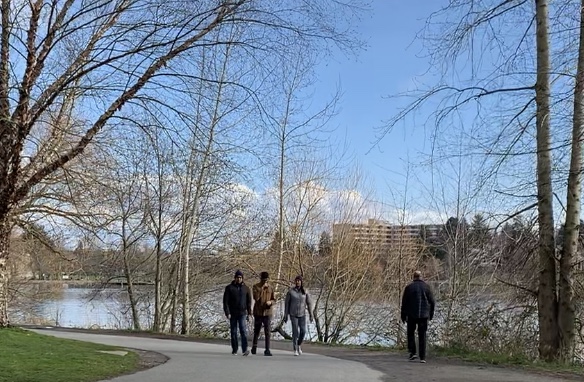
This morning I went out for a walk to burn off some of the crazy. It was 35 degrees and a strong wind made it feel even colder, yet the Green Lake bike path was packed, at some points making it hard to maintain the magic 6 ft bubble. Clearly, we were all looking for an outlet for our stress. I was furious with all these people for being out in public and not taking the guidance about social distancing seriously. Yes, I was on the path too, but in my view, my silent rant, anger, and judgment absolved me of any guilt. Though I didn’t express my fury verbally, my face is not one to hide a thought or feeling, and I’m sure my ire was visible.
Ahead I saw two families, clearly, friends, approach each other. A woman in one group yelled to the other group in jest “Hey, you’re not supposed to be walking with other people.” Her lighthearted humor sat there in stark contrast to my inner enforcer’s rant. It stopped me in my tracks, and it made me think of an Instagram video I’d watched earlier in the day by the writer, Elizabeth Gilbert.
Admitting to some overreacting of her own, Gilbert shared that when texting her family that she was returning early from her travels due to the coronavirus, she’d initially done so with a great sense of panic and heightened language. But when she read her words before hitting send she thought, “Is this how I want to be talking right now? There is enough trauma in the world right now. Do I need to add drama?” Mindfully changing her words before sending, to simply state the facts, she decided she didn’t want to add to people’s stress and panic but rather wanted to be a calming influence. I think that’s good guidance. We should all be mindful of what our words (and also our faces) communicate with the people around us. We are all scared and uncertain, and I for one plan keep in mind a mantra I borrowed from Brené Brown, “try to be scared without being scary.”